The science behind breathwork.
Breathwork – Science or Woo Woo?
We all breathe.
Many times a day.
To what end?
It seems simple, right?
In, out, In, out, In, out.
But breathing is not quite that simple.
When we breathe in, we draw air into our lungs to supply the body with oxygen. Every single cell relies on oxygen to function, repair, and produce energy. Without it, nothing works as it should.
A natural waste product of this cellular activity is carbon dioxide. This is carried via the bloodstream back to the lungs and released on the exhale.
So far, so straightforward.
But here is where it becomes more interesting.
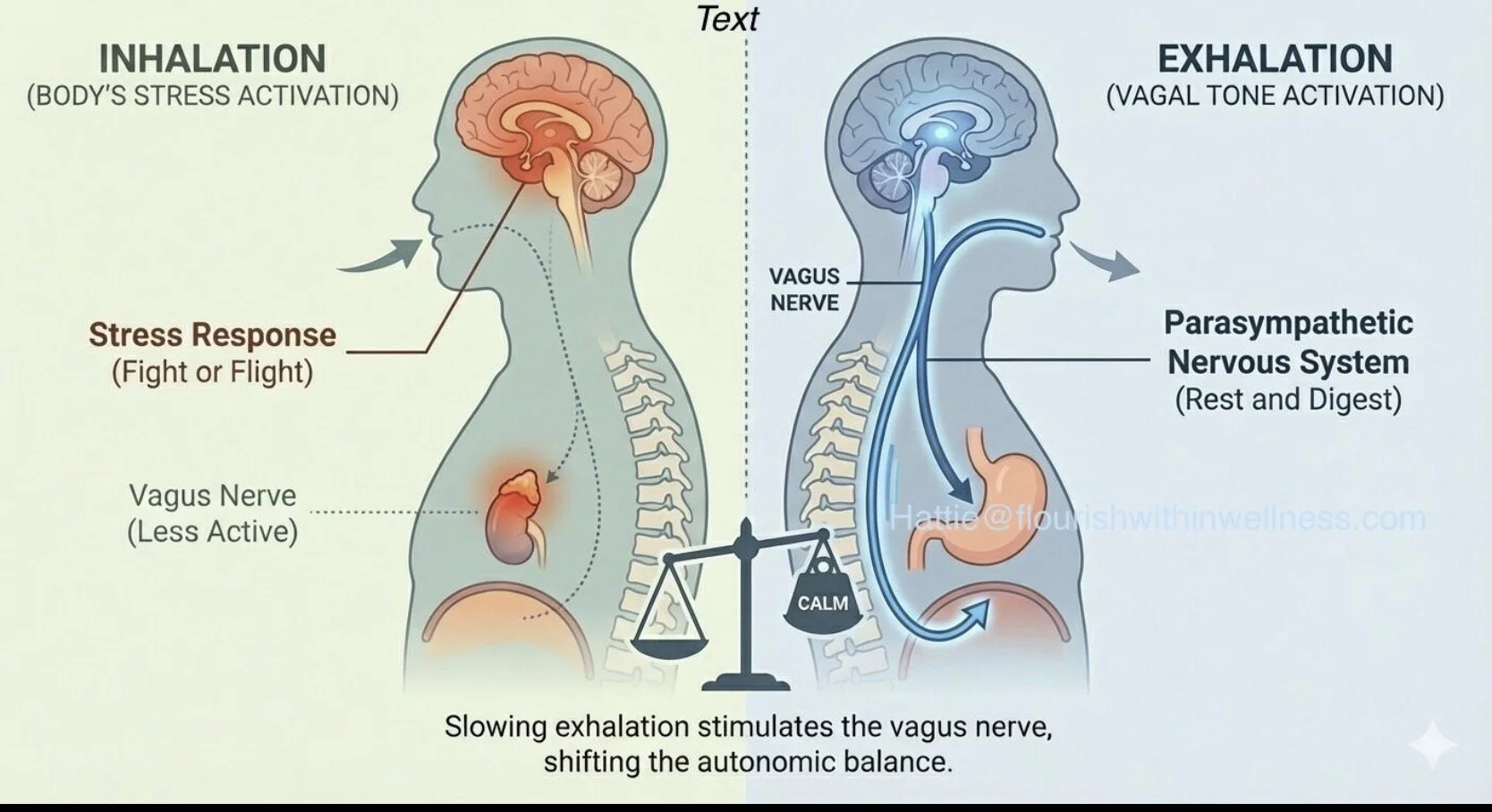
When we are stressed, panicked, anxious, or afraid, our breathing pattern changes automatically. Breaths become faster and shallower. Heart rate increases. We may feel dizzy, light-headed, or tingly. Our jaw may clench, shoulders creep up, and the tummy tightens.
This is the fight-or-flight response.
Fight-or-flight is not a flaw. It is a highly intelligent survival mechanism designed to keep us alive in moments of threat. The problem is that our nervous system cannot tell the difference between a physical danger and a perceived one like deadlines, inboxes, conflict, or constant pressure.
When this response stays switched on for long periods, the body remains in a state of high alert. Digestion, recovery, sleep, emotional regulation, and immune function all take a back seat.
This is where breathwork comes in.
By consciously slowing our breathing, particularly lengthening the exhale, we stimulate the vagus nerve and activate the parasympathetic nervous system. This is the rest-and-digest state. Heart rate slows. Muscles soften. The mind becomes clearer. The body receives the signal that it is safe to stand down.
This is not about forcing calm or bypassing stress. It is about using a physiological lever we all have access to.
And this is not just anecdotal.
Emerging research continues to show that controlled breathing practices can positively influence stress physiology, emotional regulation, and nervous system balance. A recent review published in Frontiers in Physiology highlights how slow, deliberate breathing can modulate autonomic function, reduce stress responses, and support mental and physical wellbeing through measurable biological pathways.
In other words, breathwork is not magic.
It is mechanics.
Simple, accessible, and evidence-informed.
So here is the question I want to leave you with.
Is breathwork science?
Or is it woo-woo?
And perhaps more importantly
What happens if you try it for yourself?
I would genuinely love to hear your thoughts.
And if you would like to explore how breathwork can support your own stress response in a practical, personalised way, you are welcome to contact me via my website or email me at hattie@flourishwithinwellness.com and we can explore it further together.